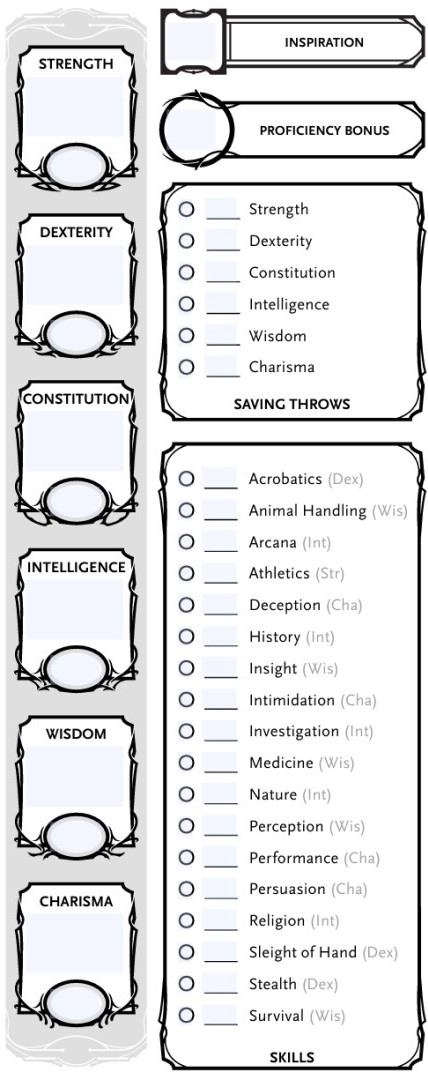
Outside of combat is where D&D becomes the most open-ended. While combat is structured around turns and actions, outside-of-combat play revolves around skill checks, creative problem-solving, and roleplay. Many of the most commonly used skills here are tied to Dexterity, Wisdom, Intelligence, and Charisma, such as Stealth, Perception, Investigation, Persuasion, Deception, and Insight. These skills help players gather information, avoid danger, influence others, and understand the world around them.
That said, Strength and Constitution still matter, just in less obvious ways. Strength might be used for forcing open doors, lifting debris, or intimidating someone physically. Constitution might come into play when resisting exhaustion, surviving harsh environments, or enduring poison or disease. Outside of combat, skills are not about winning or losing — they’re about shaping the story and deciding how the party approaches challenges before swords are ever drawn.
This part of the game rewards creativity more than optimisation. If a player explains how they’re doing something in a clever or character-appropriate way, the DM may allow a different skill to be used than expected. For example, intimidating someone with raw strength instead of Charisma, or using Performance instead of Persuasion to sway a crowd. Outside of combat, the rules support flexibility rather than restriction.